Blog

01/05/2015 13:28

Ahh...let's flag it NZ!


BY GRAHAM HAWKES


The latest poll on whether New Zealanders want to change the New Zealand flag will not please our Prime Minister, John Key.

According to the New Zealand Herald of May 1, support among New Zealanders for a flag change has dropped from 40 per cent a year ago to 25 per cent today.

Bugger! say supporters of a rework for our flag which flew so proudly and dramatically on the recent 100-year anniversary of Australia and New Zealand’s involvement at Gallipoli in World War I. 

Hooray! say those who want no change and see the centenary of that horrendous conflict as yet another reason to retain the flag’s current design.

It’s fair to say I’m somewhere in the middle. As I watched the two flags flying side-by-side, it occurred to me that the New Zealand flag has a major problem. In the space where the Aussie flag has a large white star, the New Zealand flag has nothing.
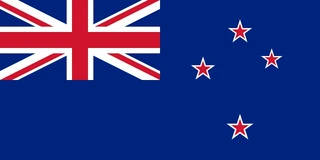
I remember a conversation when I visited Oz some years ago to join a work-related conference populated with a clear majority of Australians compared to the small New Zealand contingent.

Our respective flags flew proudly outside the conference venue, and I was constantly asked by Australian delegates why there was a big gap on our flag where their giant star was positioned.

“Couldn’t you think of anything to put there?” I was asked. At the time, I really didn’t have an answer, but just recently while I pondered John Key’s original idea of changing our flag to a black background with a silver kiwi in the centre, I had a much better idea.

Even Key himself has since ditched the ‘silver bird on black’ idea – thank goodness. That idea would have produced an export logo, not a flag – but I’ve come up with an excellent alternative.

Keep the existing flag, but in the gap where (on the Australian flag) the big star is situated, why don’t we fill that space on our flag with a large, blocky, white ‘NZ’ logo with red trim? It would simultaneously fill the awkward gap on the flag while solving the problem for people who can’t tell the difference between the two flags.

The design and size of the ‘NZ’ addition to the flag should be designed by an expert, who would be tasked with judging its size, font, and its white/red colour trimming.

We would keep the history of the current flag, but simultaneously answer the problem of ‘whose flag is it?’ And for New Zealand wine exporters - well, any kind of exporter really - they can point to the NZ logo and show buyers immediately where the product has come from.

Howzat? Problem solved! 

At last, we will put ‘NZ’ in its rightful place on our flag, and instantly achieve global recognition of our country wherever we put our flag on display.


—————

29/03/2015 14:15

They're drinking my wine everywhere

AN NZWineNews BLOG


By GRAHAM HAWKES


We all know the astonishing recent growth of the global reputation of New Zealand wine, that’s a given.


But at times you are stopped in your tracks when the web throws up a wine you’ve never heard of, but it’s from Marlborough, it's called 13 Celcius and it costs $US15 in South Carolina.

And on top of that, the winemaker was identified (in the wine review I was reading on the web!) as James Foster, who teased out “Marlborough’s vibrant aromatics of bright citrus, a crisp edge of minerality and sweet herbs which highlight the refined acidity and refreshing finish of an iconic Marlborough sauvignon blanc”. 
“Wow ... (I thought) ...I need to taste this” but it turns out to be a wine that is a production of The Wine GroupLivermore, California and it was being reviewed by a South Carolina local wine buyer, Mike Holmstrom.

The Wine Group was established in 1981 and is the world’s third-largest wine producer by volume. It’s a privately-held, management-owned company and for its 13 Celcius wine it tapped into Vintage 2013 in Marlborough, which as we know was the result of a long, dry summer with balanced and well-ripened fruit. 

The fruit was harvested in cool evening conditions and pressed immediately with minimal skin contact. TWG says James Foster opted for a 100 per cent bladder-press technique to reduce bitterness. Fermenting the juice at 13 degrees Celsius in small stainless steel tanks for more than 15 days allowed James to carefully preserve delicate aromatics. 

“Additionally, a portion of the cuvee received extended Sur-Lie contact to lift the mid-palate and elongate the elegant structure. Before bottling, the final blend received minimal filtration to create a modern classic Marlborough wine.”

So there we have it...they’re drinking our wine over there, and both American wine sellers and buyers no doubt love it. But I want to drink it too. Dammit! It’s my wine. Well, not exactly my wine, but it’s our wine...we should be sent samples from the US to ensure it’s being well looked after. What if it’s not being cared for properly and Americans sample it and go ‘bleuccch’? I guess we have to trust them.


Mike Holmstrom, the reviewer for the SC Times says the wine on the palate “shows citrus notes accentuated by pleasant herbal notes and is very elegant with bright acidity, making a versatile food partner. This is a great wine to serve with shrimp cocktail with fresh avocado and also pairs superbly with snapper and risotto.”

At least I can go out and buy the snapper, and then perhaps mix it with another wine - one that’s available here!


Well, that’s the price of fame.


—————

21/03/2014 09:15

Sauvignon blanc and J.R.R. Tolkien

By NZWineNews.com editor, Graham Hawkes 


 Bless our Australian neighbours, they never miss a trick in telling the world how much they admire us.

Remember the Olympics when we cleaned up the gold medal stakes in the rowing discipline? The Aussies were quick to admit that no one in the world is better than New Zealand at sitting on their bums and going backwards.

In the 2010 World cup, New Zealand's All Whites drew 1-1 with then world champions Italy. From memory, Australia had performed quite badly in the tournament. One of the Sydney newspapers headlined a story about New Zealand’s achievement as: Australasia 1 - Italy 1. Yes of course it was tongue-in-cheek and very funny, but there we go again.

Now the Grapegrower & Winemaker magazine from across the Tasman is painting New Zealand as “that small country at the end of the world where its inhabitants drink pints of sauvignon blanc while reading J.R.R. Tolkien”.

In a promotion for a new issue of the magazine, the publishers said: “Sorry, the image is almost inescapable these days, which is why New Zealand wine producers are working hard at moving on.

“On to profitable new pastures, on from sauvignon blanc which has tended to define every New Zealand winemaker, and on to a new international reputation built on sustainable, green credentials.

“However, in the meantime, New Zealand remains primarily a grower and maker of sauvignon blanc. It simply can’t escape that fact,” the promotion said.

At NZWineNews.com, we’re not sure ‘every New Zealand winemaker’ has necessarily been defined by his or her treatment of a savvie, but the magazine goes on to say that despite a decrease (0.9 per cent) in sauvignon blanc plantings in 2011, more than half the country’s 33,600ha of vines are of that grape.

“Pinot noir is a distant second followed by chardonnay and the next great white hope, pinot gris, which has been enjoying significant growth in production and sales in recent years.

“What it lacks in population (4.489 million) New Zealand makes up for with an enthusiastic domestic wine base, a substantial wine tourism industry and a strong $ NZ1 billion export wine market.

And is this next statistic the Aussies are quoting a bit of a backhander?

“The Kiwis consume an astounding 21.3 litres of wine a head, 15.1 litres of which is home-grown, but exports continue to be the industry’s real focus, rising ten-fold over the last 15 years and focusing on near-neighbour Australia [as well as] Britain and the US.”

Well…I guess being noticed by the Australians for doing something right is better than nothing.


—————

17/03/2014 09:34

Watch your email language

 Email has arguably boosted direct communications between people more than any other single invention since the telephone.

We’ve all had our lives changed by email - occasionally in the worst possible way.

By now, most of us have hit the Send button and delivered a message − to a friend, a lover, or the boss − and soon wished there was an automatic ‘Retrieve and Erase’ key on the computer.

The fact is, writing some emails needs a lot of care and attention. Some emails should never be sent in haste, or in anger, or out of spite. Why? There’s something about the cold, implacable, plain black and white email that carries far greater impact than a hand-written note or a face-to-face conversation.

Sometimes, seemingly innocuous phrases hit the recipient with the impact of a boxing glove. When the phone rings and there’s an angry work-mate, former friend or client on the line, you can be utterly dumbfounded by their furious reaction.

“I was just trying to jog your memory about that report you said you would write,” you stammer down the phone.
“Well there’s no need to be so nasty about it,” comes the response.

What’s gone wrong? Well, it’s simple, the curse of the email has struck again. It’s the same when the boss sends a short, sharp message: “Please come to my office immediately.” Fearing the worst, you ask him, what’s the problem?”  Then he tells you he wants to give you a raise.

Get your choice of words wrong, or write a sentence that’s too long, or too short, and something hits the ‘FURY’ button in the recipient’s brain.

Much of it depends on the mood of the person when they open your email, and of course it also depends on your mood when you wrote it. If you’re feeling a little tired or depressed, your attempts at humour or very gentle irony via email can fall dreadfully flat.

Sometimes, your words arrive on your friend’s computer screen and appear to be sarcastic, insulting, or in some way hurtful.

How to get round this problem? The easiest way is to write the email and then store it somewhere in your email programme − but don't send it out yet. Come back to it later in the day, or better still, tomorrow morning. Try this a few times as an experiment. You might be surprised how your prose reads the next day.

If you can’t delay sending the email, keep it simple. Don’t use deliberate exaggeration and don’t attempt ‘dry’ or ironic humour, especially if you don’t know the person well. They might not get the joke. Humour can deliver mixed messages when it appears on a cold, one-dimensional computer screen.

Talking to someone on a phone is different. They can ‘hear’ you smiling, they pick up the nuances in your voice that tell them − he’s kidding me.

A computer screen doesn’t do nuances very well at all. Save yourself from an angry phone call − or worse, a frozen silence from a deeply offended email recipient − that could take days, weeks or months to thaw out.
 

BY GRAHAM HAWKES - NZWineNews.com

—————

17/03/2014 09:20

Jargon, slang and plain bad language

 Sometimes I stop writing about wine for an hour or two and think about my other passion....writing!

A few recent letters from businesses looking to sell me things have got me thinking about clear, simple expression.

Who annoys you most? Is it the cellphone sales guy who promises you 'Quantum-leap personal communications 24/7 in real-time'?

Or is it the woman at the insurance company who describes your inner-city apartment as a 'fractional-ownership residence'?

Chances are, these two wax-and-waffle experts will rate just about equally on your scale of double-speak and legalese.

One of them thinks in cliches and the other believes you should never use a big word when a 'diminutive expression' will suffice.

The Plain English Campaign in England some time ago reported a survey of 340 small and medium-sized UK businesses. Fifty-one per cent of people questioned thought computer and telecommunication sellers were the worst creators of jargon.

Lawyers came second with 28 per cent, while public relations agencies were picked by 11 per cent of those questioned.

About the same time that survey hit the streets, a Stanford University study found anyone who likes to use complicated language instead of simple phrases is seen as less intelligent.

Using big words isn’t necessarily a problem. But using big words when smaller and simpler ones do the job just as well is just inexcusable.

So when you’re trying to get a message across - don’t obfuscate. Just spit it out!


BY GRAHAM HAWKES - NZWineNews.com

—————

25/11/2013 11:00

They’re sinking our wine: here and there!


BY GRAHAM HAWKES - NZWineNews.com

There are many and varied ways to ensure wine ages correctly — and I’m told there’s increasing interest in Europe in fermenting wine under the sea.
The theory is that oxygen-exposure, temperature, darkness, pressure and agitation are all “on tap” under the ocean, as opposed to a typical winery with tanks and junk everywhere.
It sounds bizarre to me, and no doubt if we tried it in New Zealand, Greenpeace would launch protest yachts on the grounds of a possible wine spill.

But even more worrying is an increasing trend by international shipping companies to send many thousands of bottles of perfectly good New Zealand sauvignon blanc to the watery depths.

And I don’t mean they’re deliberately storing them down there — I’m talking total loss, claim on the insurance, send more bottles to offshore clients and hope that ship doesn’t sink too.

Last year, the 775ft, 50,000-tonne cargo ship the Rena was wrecked on the Astrolabe reef off the east coast of the North Island, taking down with it about $400,000 of wine from — weirdly, Astrolabe Wines Marlborough. (NB...in 2012).

The winery had to rustle up another 2,800 cases to keep its overseas customers happy in time for the 2012 Christmas season of celebration. The loss was later covered by insurance.

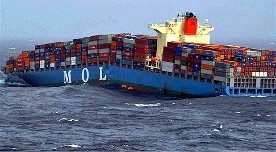
More recently, in June (2013) an even larger cargo ship, the MOL Comfort, broke into two pieces off the coast of Yemen and sank with thousands of bottles of Saint Clair Family Estate Marlborough sauvignon blanc and pinot noir aboard. The Saint Clair wine was being shipped to Sweden.
“Unfortunately, two containers of our wine headed to our Swedish market were on the MOL Comfort,” read a June 20 post on Saint Clair’s blog. “That wine will never be seen again.”

That’s not surprising because Mitsui O.S.K., the company that chartered the ship, told NZ Wine News the two halves of the ship burned furiously for some time and eventually went down in water up to 4000 metres deep.
The ship had 4,382 containers onboard and they were all lost. The contents of the containers were described as ‘sundries’ and consumer goods. The ship had 1500 tonnes of fuel on board, although how much of that burned in the fire is unknown.
The MOL Comfort was one of twelve ships of similar design plying the world’s oceans and wasn’t even an old sea dog  — it was built in 2008 — and we have been told that at least two of the other ships are already undergoing hull-strengthening work. 

Obviously the world’s shipping companies do as much as they can to avoid disasters like this — and I’m not saying they are deliberately trying to sink the New Zealand wine industry’s export drive — but hey, I think they need to lay off our sauvignon blancs.

At least if the wine stayed here in New Zealand, we could “sink it” in a more conventional and pleasant manner.

—————

09/11/2013 08:38

First blog

Our new blog has been launched today. Stay focused on it and we will try to keep you informed. You can read new posts on this blog via the RSS feed.

—————